

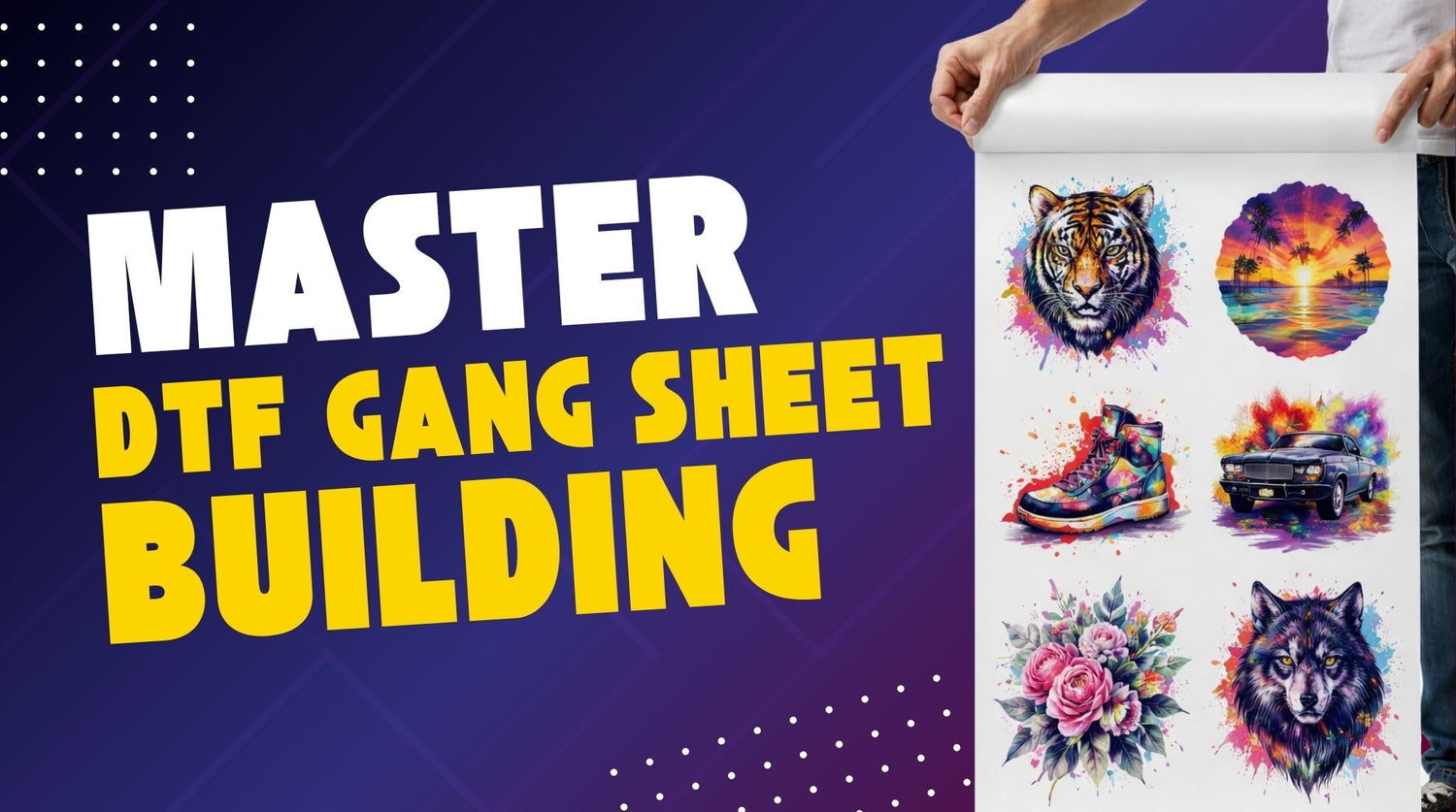
DTF printing has revolutionized custom apparel production, but smart printers know the real secret to profitability lies in gang sheets. By combining multiple designs on a single film sheet, you can dramatically reduce costs, minimize waste, and streamline your production process.
Whether you're a startup looking to optimize costs or an established shop wanting to increase efficiency, mastering DTF gang sheet building is essential for competitive success. This comprehensive guide will walk you through every aspect of gang sheet creation, from basic concepts to advanced optimization strategies.
Understanding DTF Gang Sheets: The Foundation of Efficient Printing
A DTF gang sheet is a strategically organized layout that combines multiple transfer designs on a single piece of DTF film. Think of it as a puzzle where every piece of space has value - the goal is to fit as many profitable designs as possible while maintaining quality and ease of cutting.
The Economics Behind Gang Sheets
The financial impact of gang sheets becomes clear when you consider DTF printing costs:
- Film costs are fixed per sheet size, regardless of how much you print
- Ink consumption optimizes when designs are grouped efficiently
- Production time decreases with fewer individual print jobs
- Waste reduction translates directly to increased profit margins
A properly planned gang sheet can reduce your per-transfer cost by 60-80% compared to individual printing.
Types of Gang Sheet Applications
Production Gang Sheets: High-volume orders with multiple quantities of the same designs Sample Gang Sheets: Various designs for customer approval or trade show displays Mixed Order Sheets: Different customer orders combined for efficiency Test Sheets: New designs mixed with proven sellers to minimize risk
Selecting the Optimal Gang Sheet Size
Standard DTF Gang Sheet Dimensions
| Size | Dimensions (inches) | Typical Capacity | Best Use Case |
|---|---|---|---|
| Small | 11" × 16" | 4-8 designs | Sample runs, test prints |
| Medium | 13" × 19" | 8-15 designs | Medium production, mixed orders |
| Large | 22" × 24" | 15-25+ designs | High-volume production |
| XL Roll | 22" × 36"+ | 30+ designs | Bulk orders, wholesale |
Size Selection Strategy
Consider Your Order Mix:
- Small shops: Start with 13" × 19" for flexibility
- High-volume producers: Invest in 22" × 24" or larger
- Sample-focused businesses: 11" × 16" prevents overcommitment
Calculate Break-Even Points:
- Compare cost per square inch across sizes
- Factor in cutting time and complexity
- Account for storage and handling requirements
Plan for Growth:
- Choose equipment that handles your target size
- Consider upgrade paths as volume increases
- Balance current needs with future scalability
Step-by-Step Gang Sheet Building Process
Phase 1: Preparation and Planning
Design Preparation:
- File Format: Convert all designs to high-resolution PNG with transparent backgrounds
- Resolution: Ensure 300 DPI at final print size
- Color Mode: Use RGB for screen preview, but verify CMYK compatibility
- Size Verification: Confirm all designs are properly scaled
Order Analysis:
- Group similar-sized designs together
- Identify high-priority vs. fill-in designs
- Calculate minimum spacing requirements
- Plan for cutting tool accessibility
Phase 2: Gang Sheet Builder Selection
Evaluation Criteria:
Essential Features:
- Accurate size templates
- Drag-and-drop functionality
- Real-time spacing guides
- Auto-fill capabilities
- Export optimization
Advanced Features:
- Batch processing tools
- Design library integration
- Cost calculation tools
- Template saving and reuse
- Color management
Popular Gang Sheet Builders:
Free Options:
- Basic online builders with standard templates
- Limited customization but good for learning
- Suitable for low-volume operations
Professional Tools:
- Advanced layout optimization
- Integration with RIP software
- Batch processing capabilities
- Worth the investment for high-volume shops
Phase 3: Strategic Layout Planning
Grid System Setup:
- Establish Base Grid: Start with 0.5" squares for initial alignment
- Create Zones: Designate areas for different design categories
- Plan Cut Paths: Ensure efficient cutting patterns
- Reserve Border Space: Maintain 0.25-0.5" margins around sheet edges
Design Placement Strategy:
Priority Placement:
- Large, high-value designs first
- Critical orders in optimal positions
- Test designs in secondary locations
- Fill-in designs in remaining spaces
Efficiency Optimization:
- Group similar colors to minimize ink waste
- Align designs for straight cutting lines
- Consider heat press positioning for application
- Balance visual weight across the sheet
Phase 4: Advanced Layout Techniques
Nesting Algorithms:
- Use software auto-fill for initial placement
- Manually adjust for optimal spacing
- Rotate designs to maximize space usage
- Create interlocking patterns where possible
Color Management:
- Group similar color schemes together
- Plan ink channel usage efficiently
- Consider white ink requirements for dark garments
- Optimize color transitions to prevent bleeding
Quality Zones:
- Place critical designs in center zones (best print quality)
- Use edge areas for less critical or test designs
- Account for potential edge quality variations
- Plan for post-print inspection accessibility
Optimizing Space and Efficiency
Mathematical Approach to Space Utilization
Coverage Calculation:
- Target 85-90% space utilization for optimal efficiency
- Calculate actual design area vs. total sheet area
- Factor in required spacing and margins
- Monitor waste percentage across different layouts
Spacing Requirements:
- Minimum Gap: 0.25" between designs for clean cutting
- Comfort Zone: 0.375" for complex shapes or multiple colors
- Safety Margin: 0.5" for automated cutting systems
- Border Space: 0.25-0.5" from sheet edges
Design Arrangement Strategies
Row and Column Method:
- Organize similar-sized designs in straight rows
- Maintain consistent spacing for cutting efficiency
- Use alignment guides for a professional appearance
- Plan cutting sequences to minimize repositioning
Tetris Approach:
- Fit irregularly shaped designs together like puzzle pieces
- Maximize space usage with creative positioning
- Requires more careful cutting but yields higher efficiency
- Best for experienced operators with steady hands
Zone-Based Layout:
- Assign specific areas for different design categories
- Large designs in one zone, small items in another
- Simplifies organization and inventory tracking
- Reduces errors in cutting and application
Cost Optimization and Profit Maximization
Comprehensive Cost Analysis
Direct Costs:
- DTF film: $X per square foot
- Ink consumption: $Y per square inch of coverage
- Adhesive powder: $Z per design
- Labor time: cutting, organizing, quality control
Efficiency Factors:
- Set up time amortized across multiple designs
- Reduced handling and storage requirements
- Lower packaging and shipping costs per unit
- Decreased equipment wear per design
Pricing Strategy Development
Cost-Plus Pricing:
Base Cost + (Overhead ÷ Designs per Sheet) + Profit Margin = Unit Price
Value-Based Pricing:
- Consider the customer's willingness to pay
- Factor in design complexity and uniqueness
- Account for rush order premiums
- Adjust for volume discounts appropriately
Competitive Analysis:
- Research local and online pricing
- Understand value proposition differences
- Position pricing based on quality and service
- Monitor market changes and adjust accordingly
Volume Scaling Strategies
Wholesale Opportunities:
- Partner with other small printers for shared gang sheets
- Offer gang sheet printing services to competitors
- Develop relationships with design agencies
- Create package deals for recurring customers
Inventory Optimization:
- Print extra copies of proven sellers
- Use fill-in space for inventory building
- Seasonal planning for holiday designs
- Test new designs alongside established products
Advanced Gang Sheet Techniques
Multi-Size Integration
Smart Size Mixing:
- Combine large back prints with small chest logos
- Use sleeve designs to fill narrow spaces
- Integrate hat patches with apparel transfers
- Plan coordinated design sets for complete outfits
Template Development:
- Create standardized layouts for common size combinations
- Develop quick-fill templates for rush orders
- Build seasonal templates for recurring needs
- Document successful layouts for future reuse
Color Optimization Strategies
Ink Channel Management:
- Plan color sequences to minimize waste
- Group similar colors to reduce cleaning cycles
- Optimize white ink usage for underbase requirements
- Consider special effects and their placement
Print Quality Zones:
- Identify optimal print areas on your specific equipment
- Place critical designs in the highest quality zones
- Use secondary areas for test prints and samples
- Plan maintenance based on usage patterns
Automation and Workflow Enhancement
Software Integration:
- Connect gang sheet builders with order management systems
- Automate file preparation and naming
- Integrate with inventory tracking systems
- Develop reporting tools for performance analysis
Process Standardization:
- Create checklists for each step of gang sheet production
- Develop standard operating procedures for consistency
- Train team members on optimized workflows
- Document troubleshooting procedures for common issues
Quality Control and Troubleshooting
Common Gang Sheet Issues and Solutions
Design Overlap Problems:
- Issue: Designs too close together, causing cutting difficulties
- Solution: Increase minimum spacing to 0.375" and use alignment guides
- Prevention: Build spacing requirements into initial templates
Color Bleeding:
- Issue: Adjacent designs with similar colors blending together
- Solution: Increase spacing between similar colors, adjust ink settings
- Prevention: Plan color placement during the layout phase
Cutting Accuracy Problems:
- Issue: Inconsistent cuts leading to damaged transfers
- Solution: Use cutting templates, improve lighting, sharpen tools
- Prevention: Design layouts with straight cutting lines when possible
Print Quality Variations:
- Issue: Different areas of the gang sheet show quality differences
- Solution: Calibrate the printer, check platen levelness, adjust settings
- Prevention: Map printer quality zones and plan accordingly
Quality Assurance Protocol
Pre-Print Verification:
- Check all design files for resolution and format
- Verify sheet size matches printer capabilities
- Confirm ink levels and powder availability
- Review cutting tool condition and accessibility
Production Monitoring:
- Inspect print quality at regular intervals
- Monitor ink flow and powder application
- Check for mechanical issues or wear
- Document any variations or problems
Post-Production Assessment:
- Evaluate cutting accuracy and efficiency
- Test transfer quality on sample materials
- Check organization and labeling accuracy
- Analyze cost performance vs. projections
Business Applications and Market Strategies
Target Market Identification
Small Business Segments:
- Local Screen Printers: Transitioning to DTF for small orders
- Craft Businesses: Scaling up from home operations
- Online Sellers: Optimizing costs for print-on-demand
- Event Coordinators: Managing custom merchandise efficiently
Service Opportunities:
- Gang Sheet Printing Services: For customers without DTF capability
- Design Organization: Helping customers optimize their layouts
- Cutting Services: Offering precision cutting for complex designs
- Consultation: Teaching gang sheet optimization techniques
Revenue Model Development
Direct Sales:
- Charge per square inch with volume discounts
- Offer premium pricing for rush orders
- Create package deals for repeat customers
- Develop subscription models for regular users
Service-Based Revenue:
- Consulting fees for layout optimization
- Training workshops for gang sheet building
- Equipment setup and calibration services
- Ongoing support and troubleshooting contracts
Partnership Opportunities:
- Revenue sharing with design agencies
- Referral programs with equipment suppliers
- Co-marketing with related service providers
- Joint ventures for large-scale projects
Future-Proofing Your Gang Sheet Operation
Technology Trends and Adaptations
Software Evolution:
- AI-powered layout optimization
- Automated design nesting algorithms
- Integration with e-commerce platforms
- Real-time cost calculation and pricing
Equipment Improvements:
- Faster, more accurate cutting systems
- Improved print quality and consistency
- Larger format capabilities
- Enhanced color management systems
Market Development:
- Growing demand for customization
- Increasing quality expectations
- Pressure for faster turnaround times
- Environmental consciousness driving efficiency
Scaling and Growth Strategies
Capacity Expansion:
- Plan equipment upgrades based on volume growth
- Consider multiple smaller vs. single large format systems
- Develop backup and redundancy capabilities
- Build flexibility into facility layout
Market Expansion:
- Geographic expansion of service area
- New product categories and applications
- Vertical integration opportunities
- International market possibilities
Innovation Investment:
- Research and development for new techniques
- Beta testing of emerging technologies
- Partnership with technology developers
- Continuous education and skill development
Your Gang Sheet Success Blueprint
Mastering DTF gang sheet building is both an art and a science. It requires understanding the technical aspects of DTF printing while developing the creative problem-solving skills to optimize every square inch of film.
The investment in learning proper gang sheet techniques pays dividends through:
- Reduced material costs of 60-80% per transfer
- Increased production efficiency and throughput
- Improved profit margins on every order
- Enhanced competitive positioning in the market
Start with the basics: choose appropriate sheet sizes, invest time in learning your gang sheet builder, and focus on achieving 85% space utilization. As your skills develop, incorporate advanced techniques like multi-size integration and color optimization.
Remember that gang sheet mastery is an ongoing process. Each layout teaches you something new about space optimization, customer needs, and production efficiency. Document your successes, learn from mistakes, and continuously refine your approach.
The businesses that master gang sheet building will have significant competitive advantages in the growing DTF market. Start building your expertise today, and watch your efficiency and profitability soar.
Ready to revolutionize your DTF production? Florida DTF Factory offers comprehensive gang sheet building tools, expert guidance, and the highest quality printing services to help you maximize your success. Let's build something amazing together.



Leave a comment
This site is protected by hCaptcha and the hCaptcha Privacy Policy and Terms of Service apply.