

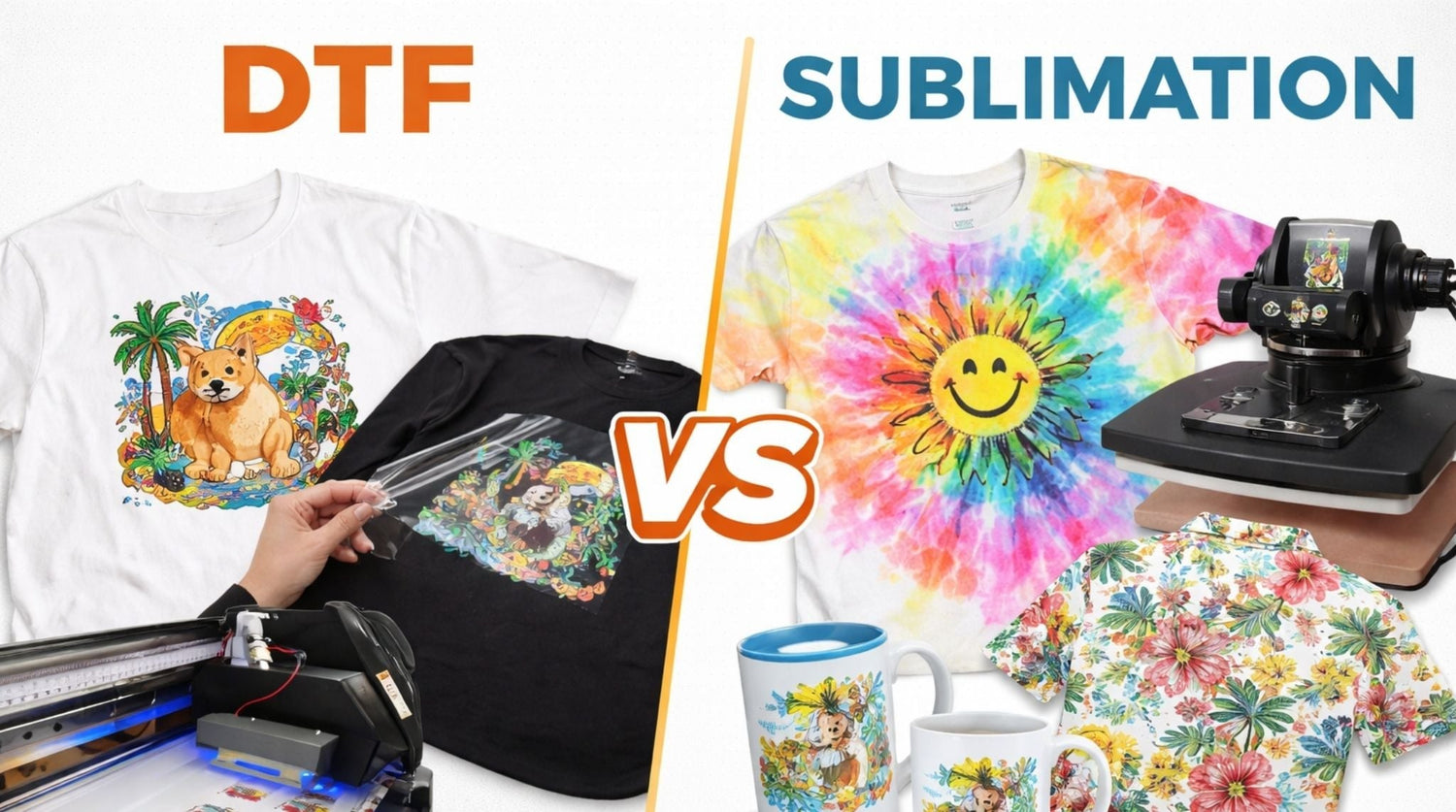
If you are trying to pick between DTF (Direct-to-Film) and sublimation, you are not alone. Many people get stuck at this stage. Maybe you want to print on cotton, or maybe you tried polyester and liked how soft it felt.
The truth is, one method isn’t "better" than the other. The right choice depends on what you are making. Are you printing hoodies? Sportswear? Dark t-shirts?
This guide compares the two methods based on what really matters: fabric type, cost, and the final look of the product.
Quick Comparison: The Main Differences
- DTF works on almost anything: cotton, polyester, blends, and dark colors.
- Sublimation has strict rules: it works best on white or light-colored polyester.
- DTF prints sit on top of the fabric like a thin, flexible layer.
- Sublimation ink soaks into the fabric fibers.
- DTF allows you to print white ink; sublimation does not.
If you plan to sell black cotton t-shirts, sublimation will not work for you. If you only make white athletic jerseys, sublimation might be perfect.
What Are These Printing Methods?
What is a DTF Transfer?
DTF stands for Direct-to-Film. The process is simple: you print a design onto a special plastic sheet (film). Then, you add a powder glue to the wet ink and melt it. Finally, you use a heat press to stick the design onto your shirt.
The result is a colorful print that sits on top of the fabric. Because DTF printers have white ink, you can put bright designs on dark black shirts, and they will still look vibrant.
What is Sublimation?
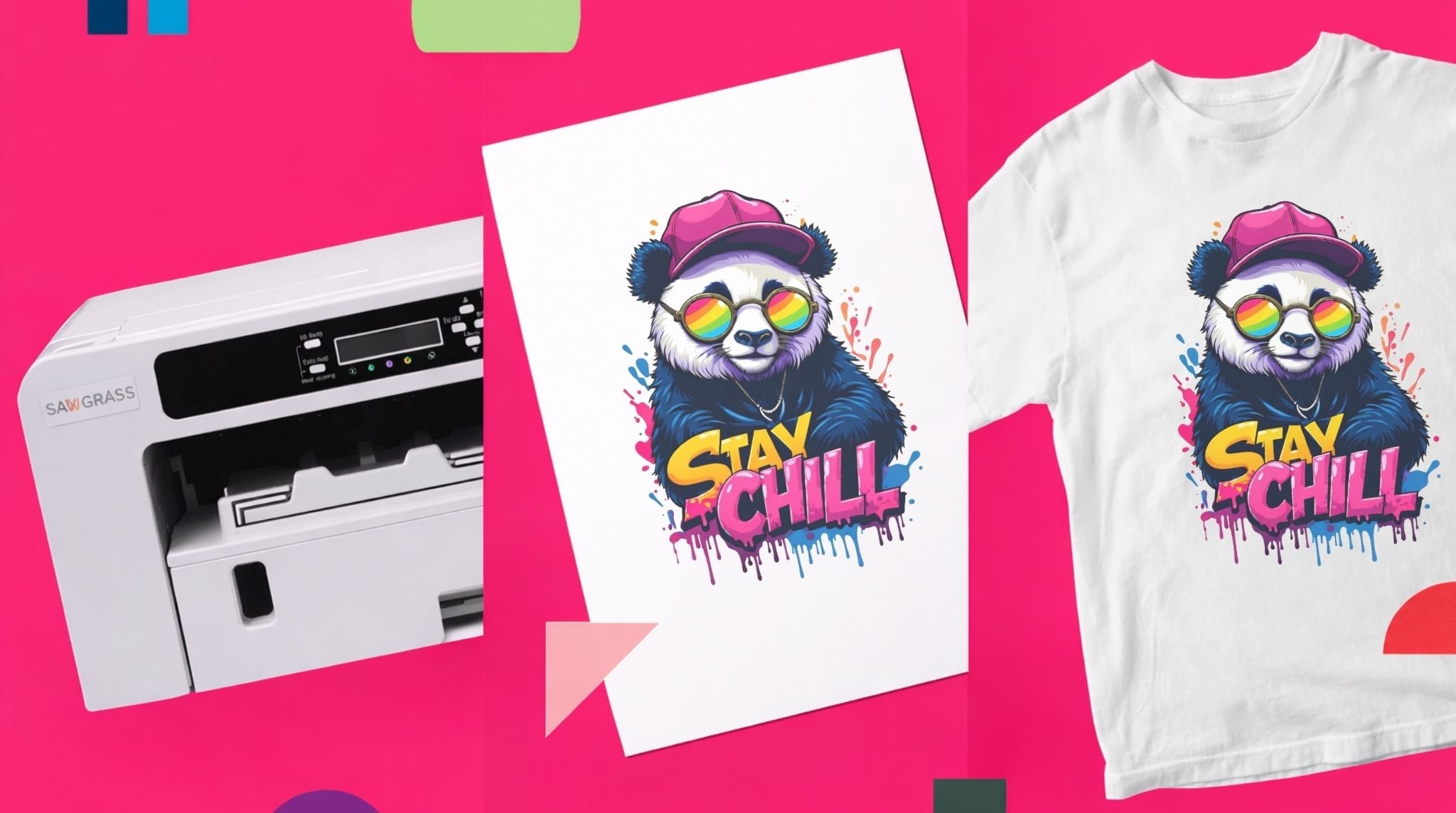
Sublimation is a chemical process. When you heat the special ink, it turns into a gas. This gas bonds permanently with polyester fibers. The ink actually becomes part of the shirt.
The result is a super soft print that you cannot feel with your hand. However, because there is no white ink, you cannot use this method on black or dark-colored garments. The colors simply won't show up.
The Big Differences That Matter
1. Fabric Options (The Dealbreaker)
This is usually how people decide which method to use.
- DTF: It is very versatile. You can print on 100% cotton, 50/50 blends, polyester, fleece, and even nylon. It works on white shirts, black shirts, and everything in between.
- Sublimation: It is limited. You must use garments that are mostly polyester (at least 65%, but 100% is best). You also must use light colors like white or light gray.
The Verdict: If you want to start a streetwear brand with heavy cotton t-shirts, DTF is your only choice here. If you are making team uniforms on "dri-fit" material, sublimation is a great choice.
2. How the Print Feels (The "Hand")
"Hand feel" refers to how the shirt feels when you touch the print.
- Sublimation: It has "zero hand." Since the ink is inside the fabric, you cannot feel the print at all. It feels just like the rest of the shirt.
- DTF: It creates a layer on top of the shirt. Good quality DTF is thin, soft, and stretches well, but you can still feel that there is a design there.
The Verdict: If your customers demand a print they can't feel, sublimation wins. If they want bold, bright colors on any fabric, they usually don't mind the slight feel of DTF.

Leave a comment
This site is protected by hCaptcha and the hCaptcha Privacy Policy and Terms of Service apply.